9-minute read · Published 13 November 2026
HM Land Registry Fee Changes Proposed: What Executors and Inherited Property Owners Should Know
Separate today's Scale 1 and Scale 2 rules from the proposed fixed fees and ownership-data changes.
Inherited property · England & Wales
Understand what to check before you sell, sign or distribute. Start privately, compare the available routes and move forward without pressure.
Before deciding whether to sell
The correct next step depends on ownership, authority to administer the estate, probate, liabilities, occupancy and the wishes of those involved.
Free private assessment
General information, not a recommendation to sell.
The first paid product
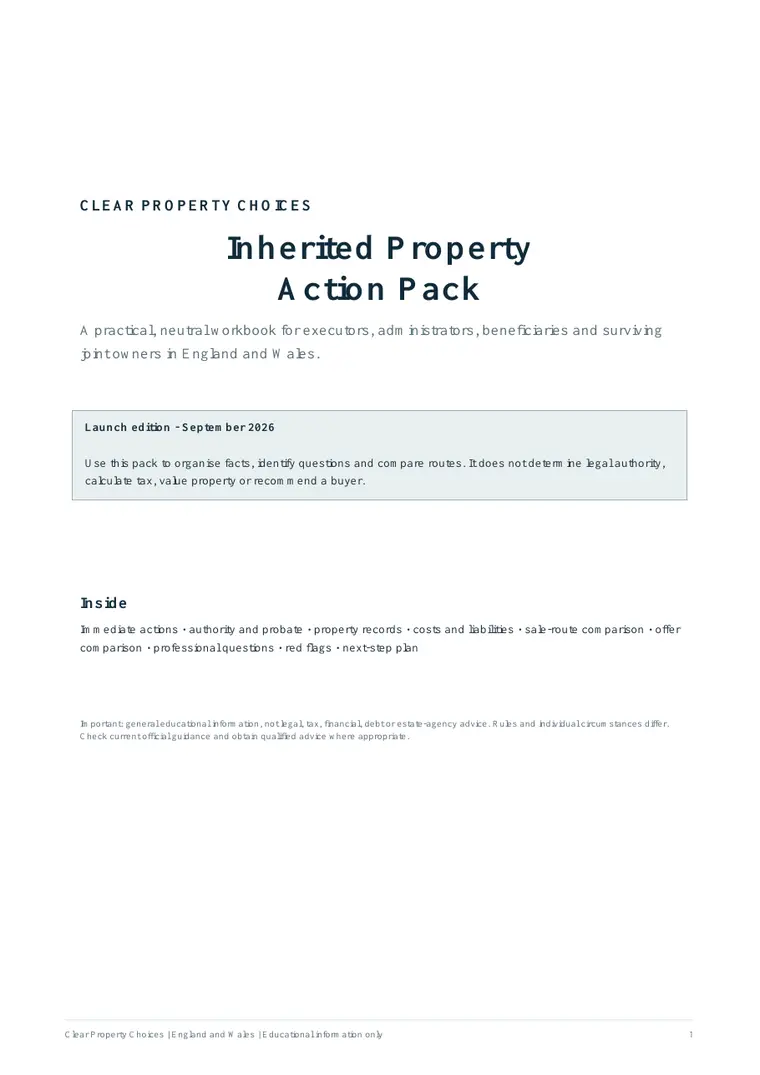
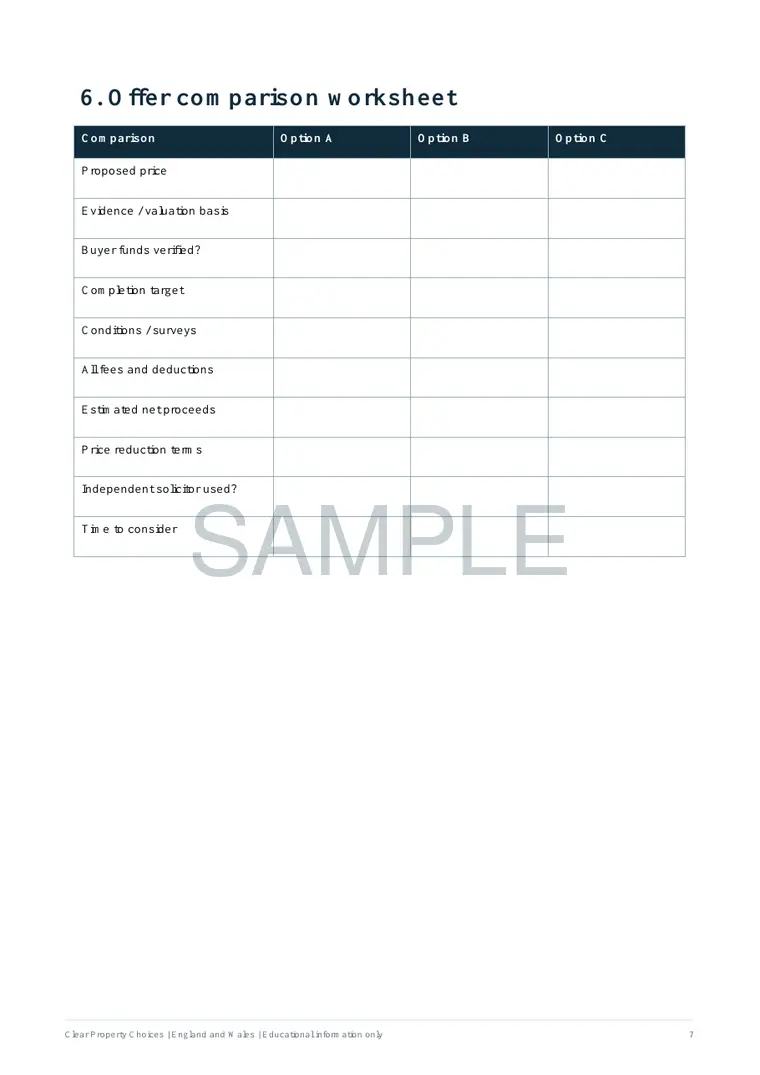
A 12-page practical workbook for executors, administrators, beneficiaries and surviving joint owners. It helps turn uncertainty into an organised list of facts, questions and comparisons.
Updated · 31 October 2026Two genuine sample pages from the current edition. The complete workbook is supplied only after purchase.
Seller protection
This launch sells educational information only. It does not introduce property buyers, provide valuations or negotiate transactions.
Free practical guides
9-minute read · Published 13 November 2026
Separate today's Scale 1 and Scale 2 rules from the proposed fixed fees and ownership-data changes.
8-minute read · Published 30 October 2026
Understand the original reporting deadline, the limited Budget penalty change and what remains payable after a late filing.
8-minute read · Published 29 October 2026
Verify the contact, understand the repayment and interest, record additional costs and check the proposed tax relief.
8-minute read · Published 28 October 2026
Understand the proposed timing-rule change, Income Tax, lump-sum allowances and the separate IHT reforms from April 2027.
6-minute read · Updated 31 October 2026
Understand the closed interim route, the separate main IBCA scheme and how an estate representative can register an intent to claim.
9-minute read · Updated 24 October 2026
Understand the death-related exemption, the Class I exception from empty-home premiums and the dates to confirm with the council.
8-minute read · Published 21 October 2026
Check whether the estate needs an SA900, can use HMRC's informal arrangements, or has no income to report for 2025–26.
11-minute read · Updated 1 November 2026
Prepare the property, document valuations, compare buyer readiness and assess offers without allowing urgency to replace evidence.
8-minute read · Updated 23 September 2026
A calm, practical sequence for confirming authority, protecting the property, recording costs and comparing the available routes.
8-minute read · Published 15 October 2026
How to seek information, understand estate accounts, consider mediation and recognise when formal legal advice may be needed.
9-minute read · Published 18 October 2026
Compare official HMRC routes, verify the provider and understand the full cost, security and delay risks before accessing money early.
9-minute read · Published 19 October 2026
What title plans really show, which documents to gather and when a boundary, access or neighbour question needs professional advice.
Verified starting points
Content checked 20 September 2026. England and Wales only.
Transparency
Clear Property Choices is a trading name of Claudio Battaglia, operating as a sole trader. Business correspondence address: 3 Rymill Road, Banbury, Oxfordshire, OX16 9ZY, United Kingdom. Email: support@clearpropertychoices.co.uk.
The free assessment is not influenced by a buyer or property professional. The first commercial product is the £19 educational Action Pack. We currently receive no referral or completion fee.
Assessment answers stay in your browser. Do not enter sensitive information. When checkout is connected, its provider will process order and payment information under its privacy notice; order data will be used only for fulfilment, support, accounting and legal obligations.
General educational information for adults dealing with inherited property in England and Wales. Not legal, tax, financial, debt, valuation or estate-agency advice. No outcome, price, timescale or tax treatment is guaranteed. The pack is licensed to the purchaser for personal use and may not be resold or used to advise others professionally.
Questions, correction requests and complaints about the Action Pack can be sent to support@clearpropertychoices.co.uk. This service does not handle property sales or complaints about third-party professionals.
Official-source guidance for England & Wales